Zettelkasten without the ritual: what actually transfers
Filed under Guide
By Gerald · 11 August 2026

Most Zettelkasten content is written for people who already believe in it. You get Niklas Luhmann's biography, a numbering scheme with letters and subscripts, and screenshots of somebody's beautifully tangled Obsidian graph. What you rarely get is someone saying plainly that half of this was a workaround for paper, not a principle for thinking.
Two habits from Zettelkasten are worth adopting no matter what software you use: write one idea per note in your own words, and link notes to each other as you write instead of filing them into folders afterward. The unique ID numbering, the strict two-box paper system, and the mystique around exactly how many notes Luhmann kept are mostly not the reason it worked.
Zettelkasten's engine isn't the numbering system. It's writing one thought per note, in your own words, linked to the notes it actually relates to.
What the slip-box was actually solving
Niklas Luhmann, the sociologist behind the method, built a personal card index that grew over decades and, by his own account, helped him produce an enormous body of published work: around 50 books and over 600 articles, an output he consistently attributed to how the slip-box let him think, according to zettelkasten.de's introduction to the method. Figures around the total note count vary across sources and are frequently repeated without a clear citation, so treat any specific total you read with some caution rather than as an exact, verified number.
The problem the system solved was retrieval and connection using nothing but paper. A physical card box cannot be searched. It cannot show you every card that mentions a concept. The only way to find related ideas was to build the relationships into the cards themselves at the time of writing, through explicit links and a numbering scheme that let one card point to exactly where another lived in the box.
That constraint produced genuinely good habits. It also produced a lot of overhead that existed purely because paper cannot do full-text search, and modern note apps can.
The two habits worth keeping
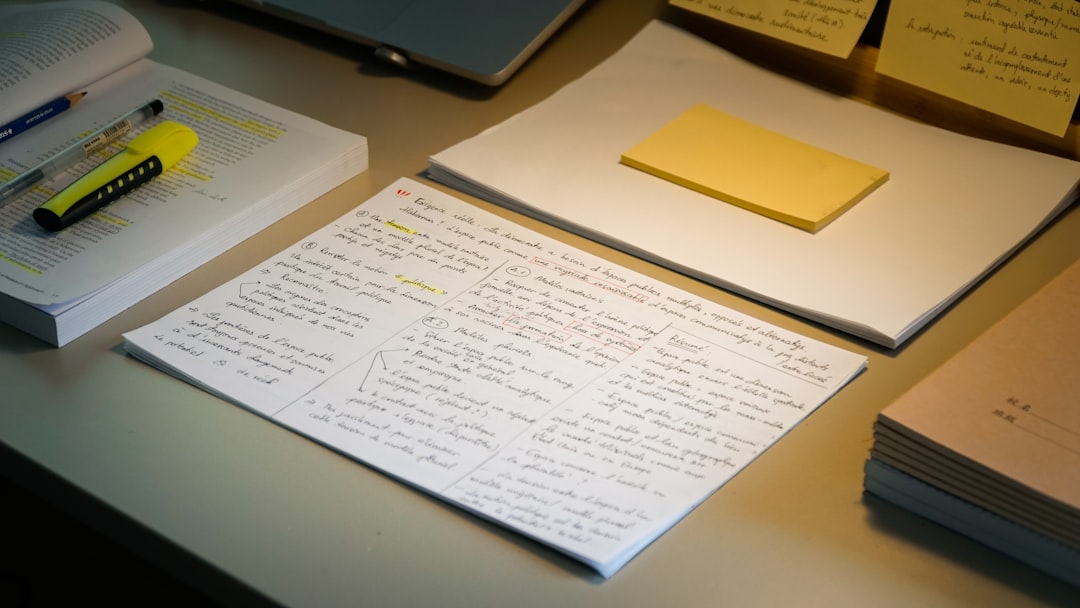
Write atomic notes. One idea per note, in your own words, not a copy-pasted highlight or a summary of an entire chapter. This forces you to actually understand the idea well enough to restate it, which is most of the value of "taking a note" in the first place. A note that tries to hold three ideas becomes hard to link cleanly to anything, because it is never fully about one thing.
Link as you write, not later. When a new note relates to an existing one, link them immediately, while the connection is fresh in your head. Filing and cross-referencing after the fact, as a separate cleanup pass, rarely happens consistently, and even when it does, you have lost the specific reasoning that made the connection obvious in the moment you wrote the note.
Both of these transfer directly to any note app with search and linking, no numbering scheme required.
The parts that were paper-era workarounds
The alphanumeric ID system, where a note might be labeled 3a2b, existed to encode a fixed physical location in a box that could not be resorted. Once you can search full text and follow links directly, a fixed address code for "where this card physically sits" stops doing anything useful. Modern note apps generate a unique ID for you (a filename, a database key) without you ever needing to think about it or design a numbering scheme by hand.
The rigid two-box separation, a reference collection distinct from the main slip-box, was also a physical constraint: different card sizes and handling needs for different types of material. Digital notes do not need two separate physical containers for two kinds of content, tags and note types handle the distinction without needing a second box.
None of this means the ritual is wrong. If you find the numbering scheme satisfying to maintain, keep it. It is just not the load-bearing part of why the method works.
Atomic notes without the numbering scheme
In practice this means: when you write a note, ask whether it is really one idea. If you catch yourself writing "and" to connect two separate thoughts in the same note, that is usually a sign to split it. A short note that is genuinely about one thing is more useful later than a longer note that is about several things loosely related.
You do not need a formal ID to reference this note later. A descriptive title and your app's search function do the job a numbered address used to do, and they do it faster, since you can search by the content of an idea rather than needing to already know its assigned code. Naming a note well matters far more than a numbering scheme ever did, precisely because it is what search and your own memory both key off later.
Linking as you write instead of filing later
The habit that actually matters is temporal, not structural: link at the moment of writing, while you remember why two ideas connect. This is the part most digital note-takers skip, because most apps make linking optional and easy to defer, and deferred linking mostly does not happen.
Practically: as you write a new note, spend thirty seconds asking what it relates to, and add that link before you move on. Waiting until a weekly review to add links loses the specific reasoning that made a connection obvious in the moment, and that reasoning rarely comes back intact once the note is a week old. A note app with fast, in-context linking rewards this habit; one that buries linking behind a separate screen quietly punishes it.
When a vault becomes a museum
The failure mode of Zettelkasten is not too few notes, it is a large collection of atomic, well-linked notes that nobody ever revisits, because the linking habit turned into an end in itself. A beautiful graph view is not evidence the system is working. Evidence that it is working looks like: you searched for something you needed, found a note you wrote months ago, and it saved you from re-deriving the idea from scratch.
If your note collection has become something you tend rather than something you use, that is worth noticing honestly. The fix is not a better linking scheme. It is asking, the next time you need an idea, whether your notes actually produced it faster than thinking from scratch would have.
I keep a rough personal rule for this: if I have not opened a note in six months and cannot think of a reason I would, it is not part of my active thinking anymore, whatever its link count says. That does not mean deleting it. It means being honest that it has become an archive entry, not evidence that my system is working.
Who this transfers well to
- Anyone taking notes on ideas they revisit and build on over months or years, not just single-use reference material
- Writers, researchers, and people doing long-running project work where connecting past thinking to a current problem pays off repeatedly
- People who have tried a full numbered Zettelkasten before and abandoned it, since the two habits above are what was actually doing the work
Frequently asked questions
Do I need unique IDs for Zettelkasten notes? No, not in a digital system with search. Luhmann's numbering scheme encoded a fixed physical location in a paper box that could not be resorted. A modern note app's search and backlinks do the same retrieval job without you maintaining a manual address code.
What is an atomic note? A note that contains exactly one idea, written in your own words rather than copied from a source. If a note needs "and" to describe what it is about, it usually contains more than one idea and should be split.
Is Zettelkasten worth it if I do not write publicly? Yes, the core habits, atomic notes and linking as you write, help anyone thinking through a problem over time, not only people producing published work. The parts worth skipping if you are not writing at scale are the more elaborate indexing rituals built for managing thousands of cards.
How many notes before a Zettelkasten becomes useful? There is no threshold number. A small collection of well-linked, atomic notes on a topic you are actively thinking about is useful immediately. The commonly cited large totals from Luhmann's own collection describe a multi-decade academic career, not a starting point to aim for.
Can I do Zettelkasten without Obsidian? Yes. The method predates any specific app by decades and only needs two things: a place to write short, single-idea notes, and a way to link between them. Any note app with search and note-to-note linking supports it, Obsidian is a popular choice but not a requirement.
Related reading
- PKM without the cult
- Note-taking methods ranked
- The PARA method, trimmed
- How to name notes you can find later
- Flow compared with Obsidian
- Why tags carry a second brain
My verdict
Keep the two habits, one idea per note and linking as you write, and skip the numbering ritual entirely. It was a solution to a paper problem you no longer have, and treating it as sacred is the fastest way to spend more time maintaining a system than using it.